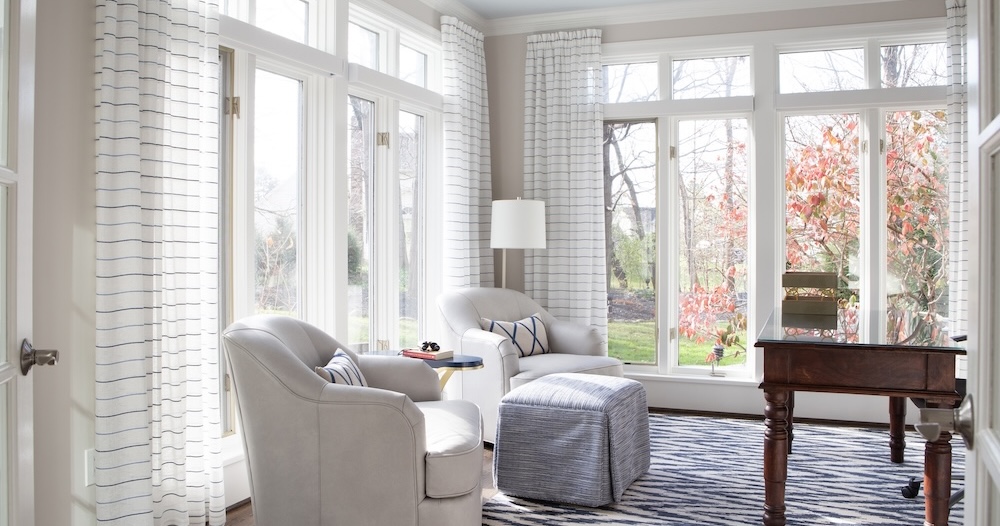
Earlier this year, we added upholstery to our fabrication services, and it has quickly become a favorite among our designers and clients. From giving a well-loved chair an entirely new look to building a custom ottoman from the frame up, upholstery has opened up even more possibilities for creating one-of-a-kind pieces. It combines an incredible amount of hand craftsmanship with the freedom to select the fabrics, details, and finishes that make furniture feel like it truly belongs in the room.
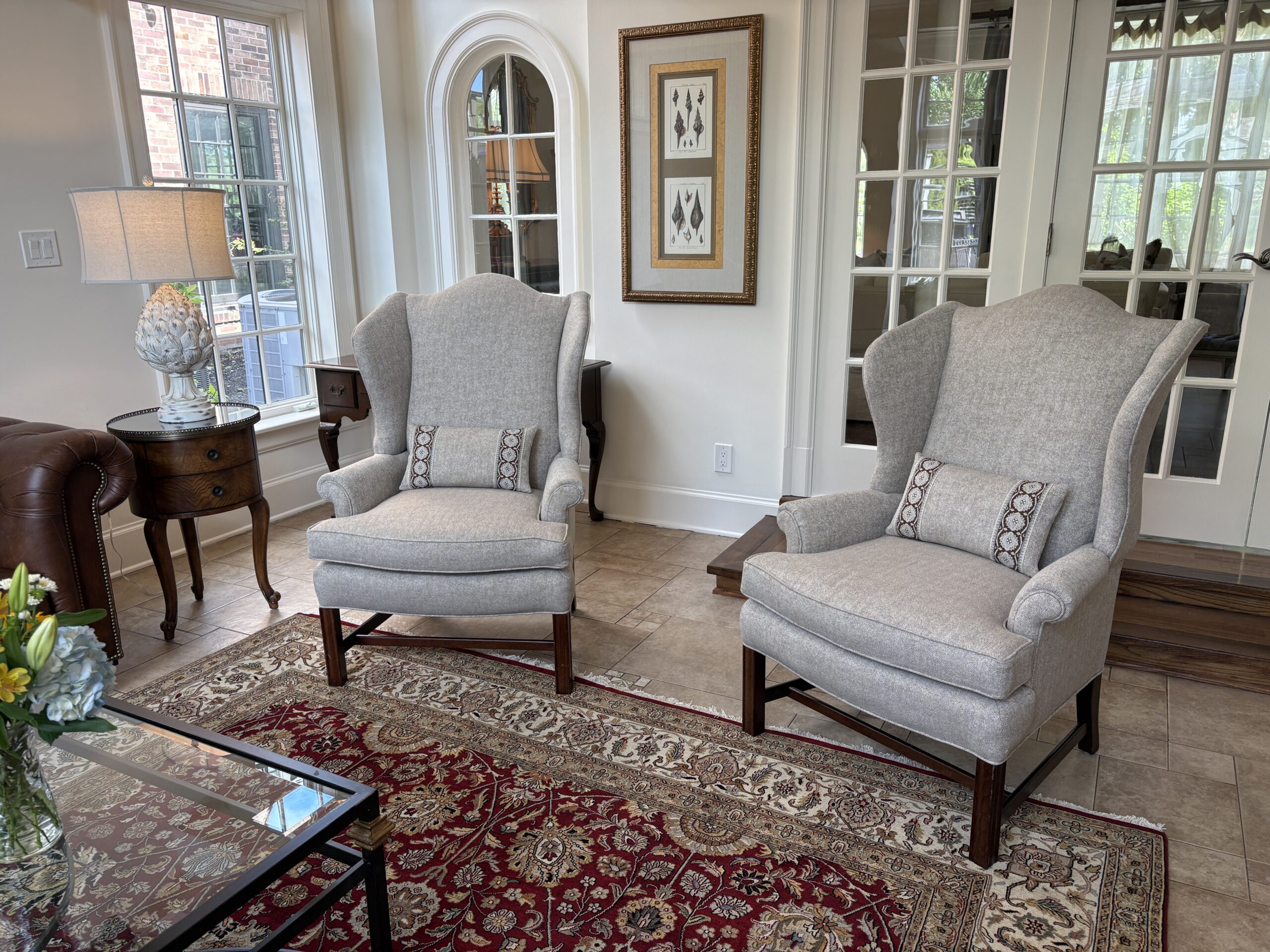
And while the finished result may look effortless, there is an incredible amount of work happening underneath the fabric.
More Handwork Than Meets the Eye
Upholstery is an extremely hands-on process. Before a new fabric ever goes onto a piece, the existing upholstery must be carefully removed, often layer by layer. This gives us access to the structure underneath and allows us to see what needs attention before rebuilding begins.
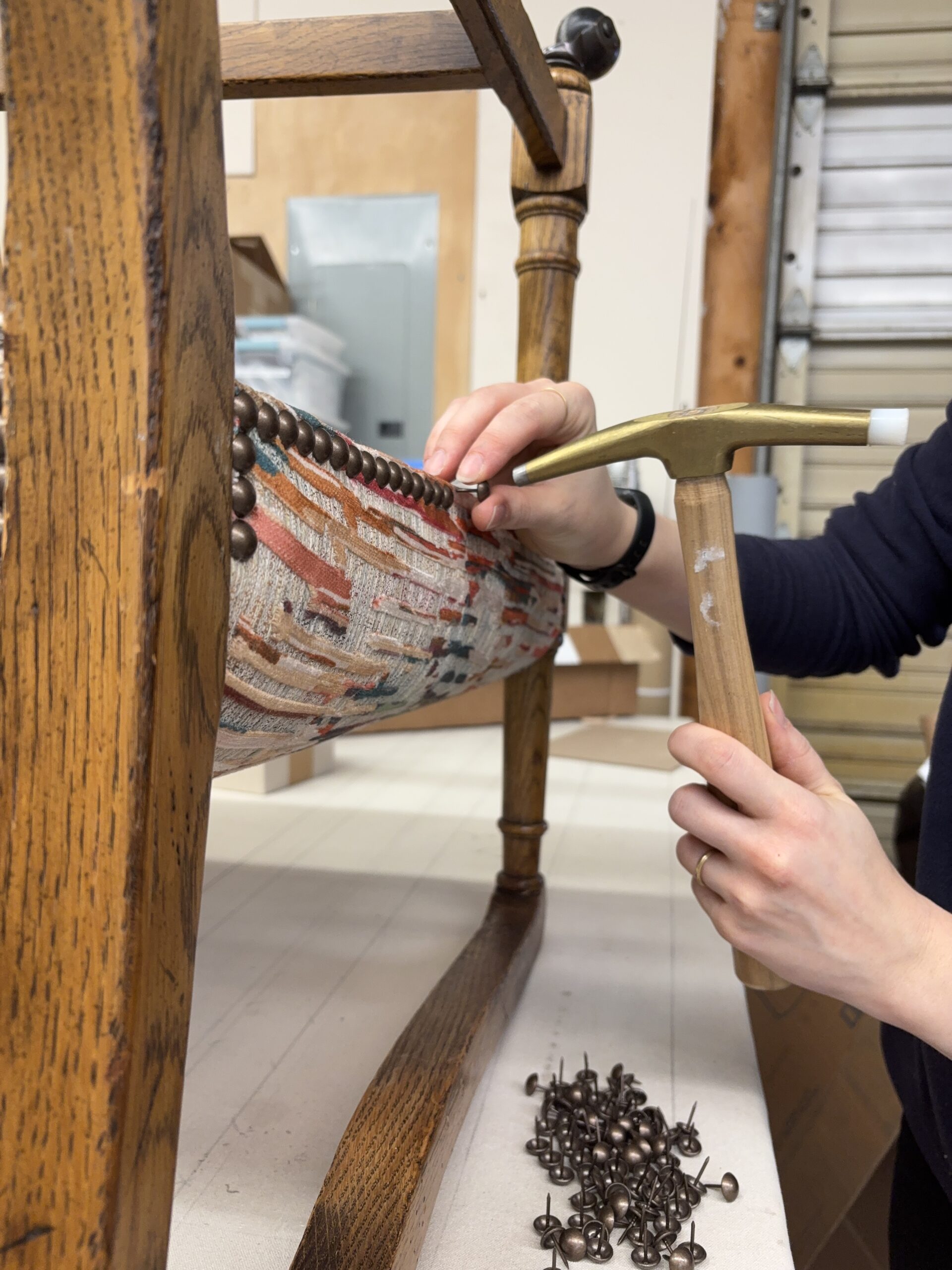
From there, each piece presents its own challenges. Fabric has to be positioned, cut, stretched, shaped, sewn, and secured around an existing three-dimensional form. Curves, corners, seams, cushions, tufting, trim, and pattern placement all require careful consideration.
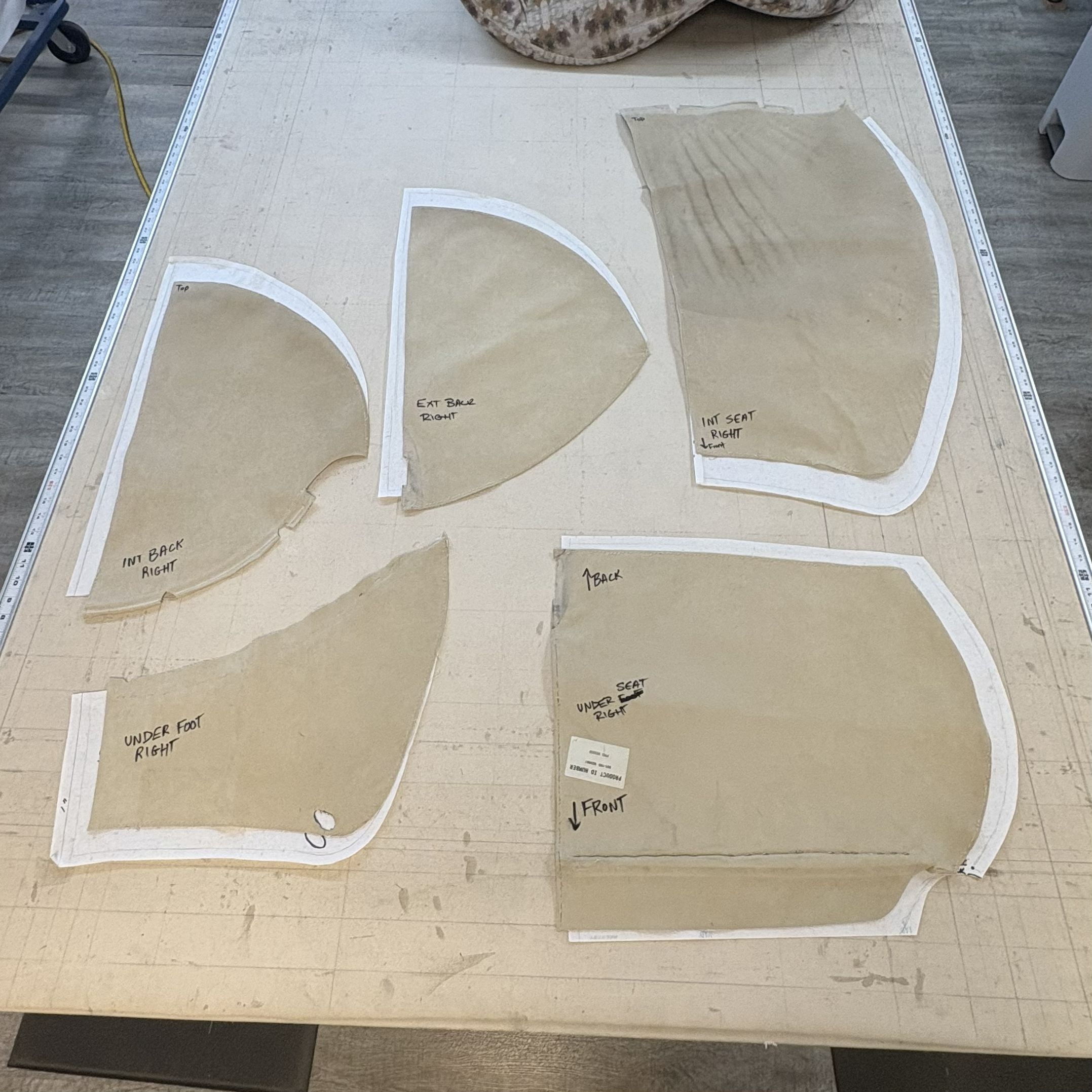
Before the fabric ever reaches the chair, each pattern piece is carefully laid out and cut, setting the stage for everything that comes next.
Much of that work is completed by hand. The tension of the fabric has to be carefully controlled, corners need to be shaped cleanly, patterns need to land exactly where intended, and countless small adjustments contribute to the finished result.
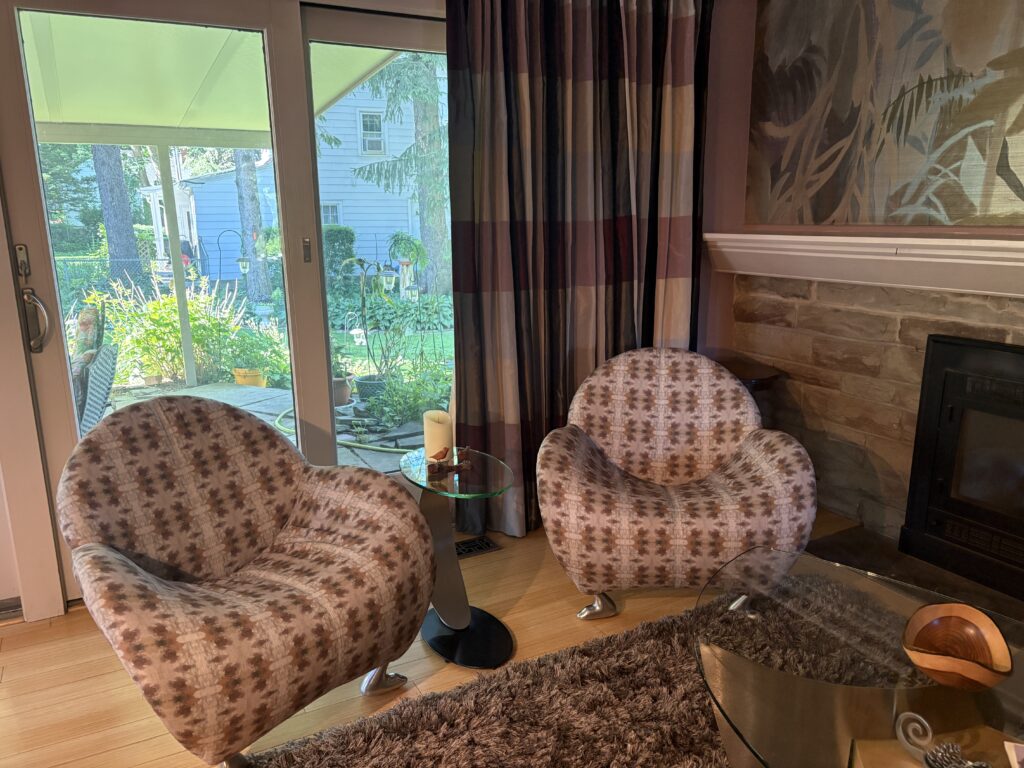
It’s one of those crafts where much of the work disappears when it’s done correctly. What remains is a beautifully finished piece of furniture.
Giving a Favorite Piece a New Life
There are plenty of reasons to become attached to a piece of furniture. Maybe it fits a particular corner perfectly. Maybe the scale is just right for the person who uses it every day. Maybe it has sentimental value that simply can’t be replaced.
Eventually, though, even a favorite piece can begin to show its age. Fabric wears, cushions lose their shape, and colors and patterns that once suited a room may no longer reflect the owner’s style.
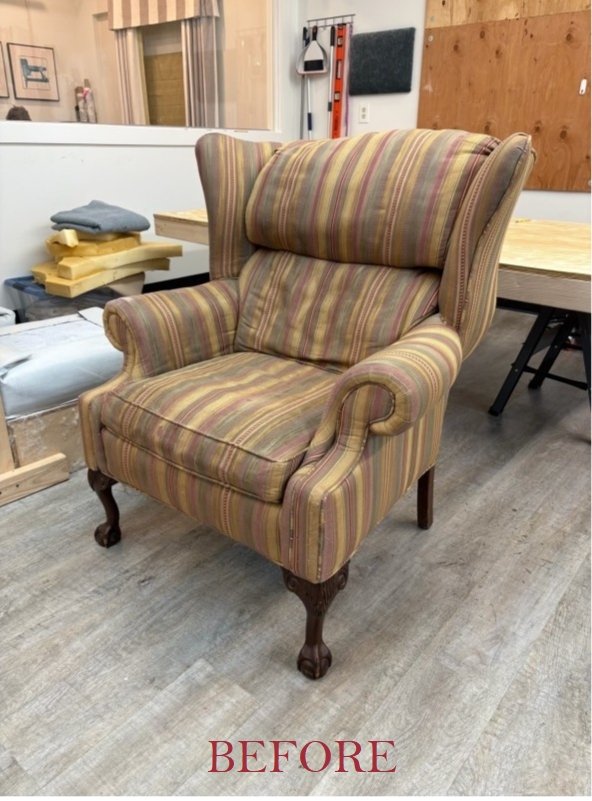
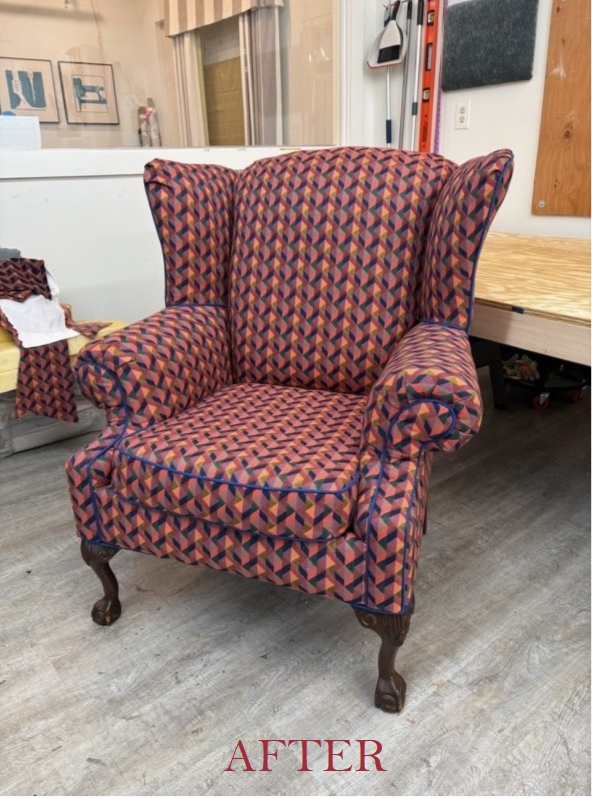
That doesn’t necessarily mean it’s time to start shopping for something new.
Reupholstery allows a well-loved piece to evolve. Changing the fabric alone can completely alter its personality, taking a chair from traditional to playful, giving a dated piece a more current feel, or simply restoring the beauty that made someone fall in love with it in the first place.
Fabric options have also changed tremendously over the years. Today’s selection includes an enormous variety of colors, textures, patterns, and performance options, creating opportunities that may not have existed when the furniture was originally purchased.
The result can be a piece that still feels familiar but looks completely at home in its new surroundings.
Furniture Designed for the Room
One of the greatest advantages of custom upholstery is that furniture no longer has to be treated as a separate element of the design.
When designers can select the exact fabric for a chair, sofa, or ottoman, that piece can become part of the larger textile story within the room. Upholstery can be thoughtfully coordinated with drapery, roman shades, cushions, pillows, bedding, and other soft furnishings to create a cohesive design.
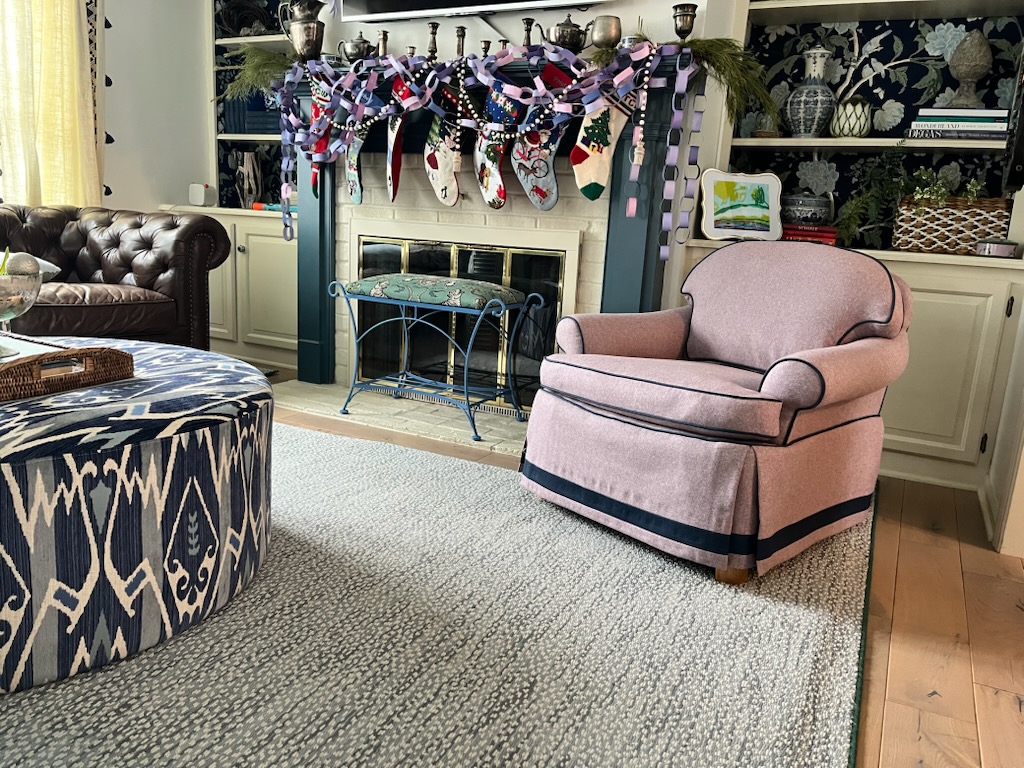
A color from the drapery might be repeated on a chair. A patterned upholstery fabric can introduce contrast to otherwise quiet window treatments. Pillows can pull elements from several fabrics together. Even details such as welt, trim, nailheads, or decorative accents provide another opportunity to reinforce the overall design.
Instead of searching for ready-made furniture that comes close to the right color or pattern, designers can make an existing piece exactly what the room needs.
The Details Make It Custom
Custom upholstery also opens the door to details that make a piece truly individual. Contrast welt, decorative trim, carefully placed patterns, tufting, nailheads, and coordinating cushions can all change the character of the finished furniture.
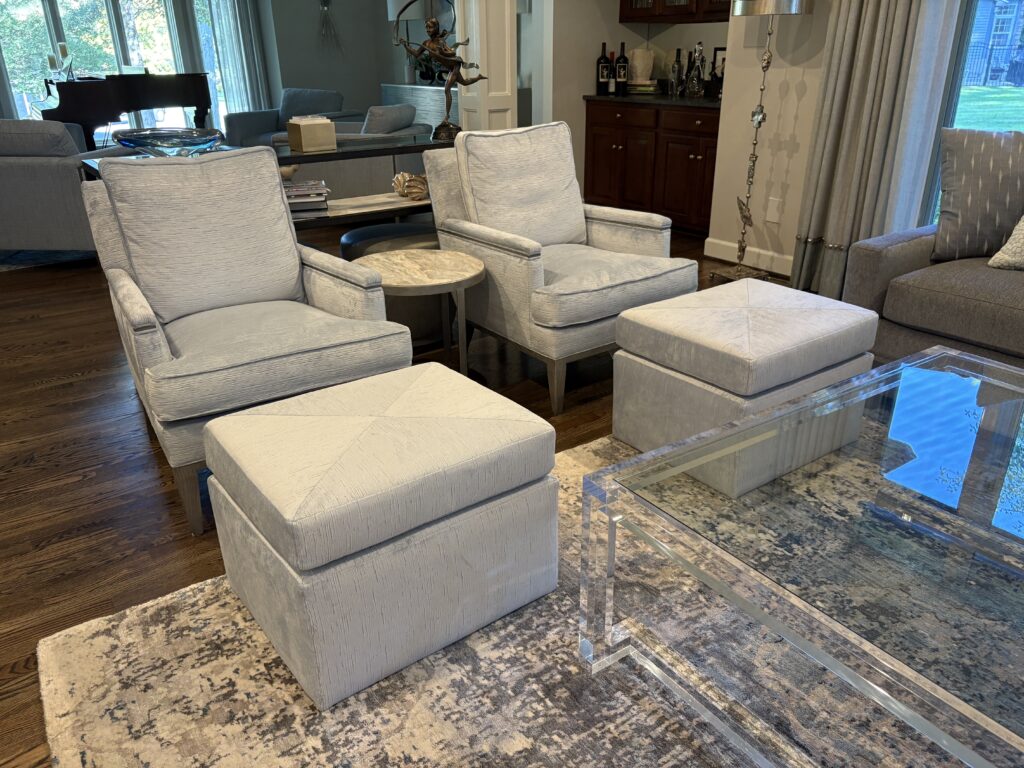
The seams across the tops of these custom ottomans create a subtle decorative pattern, adding interest to an otherwise simple upholstered shape.
Pattern placement can be especially important. A large-scale print or stripe can’t simply be cut wherever it happens to fall. The pattern needs to be considered across the seat, back, arms, cushions, and other visible areas so the finished piece looks intentional.
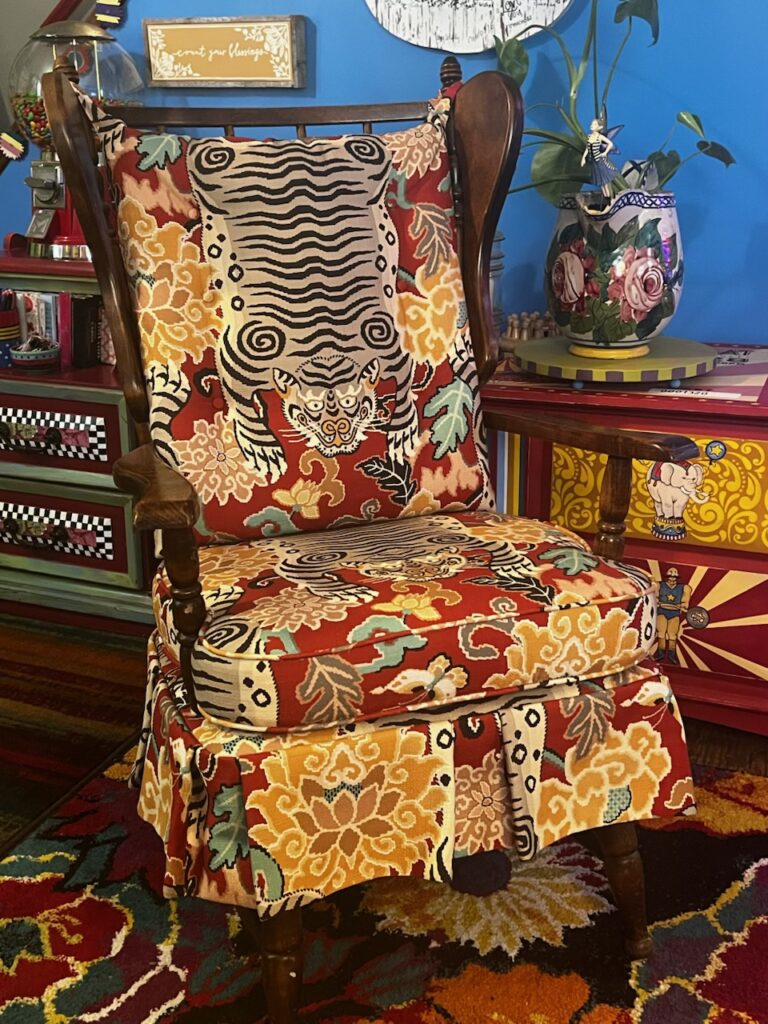
These decisions may seem small individually, but together they are what distinguish custom upholstery from something selected off a showroom floor.
Starting From Scratch
Upholstery doesn’t always begin with an existing piece of furniture. We’ve also fabricated custom ottomans entirely from scratch, starting with the frame itself and building each layer through to the finished upholstery.
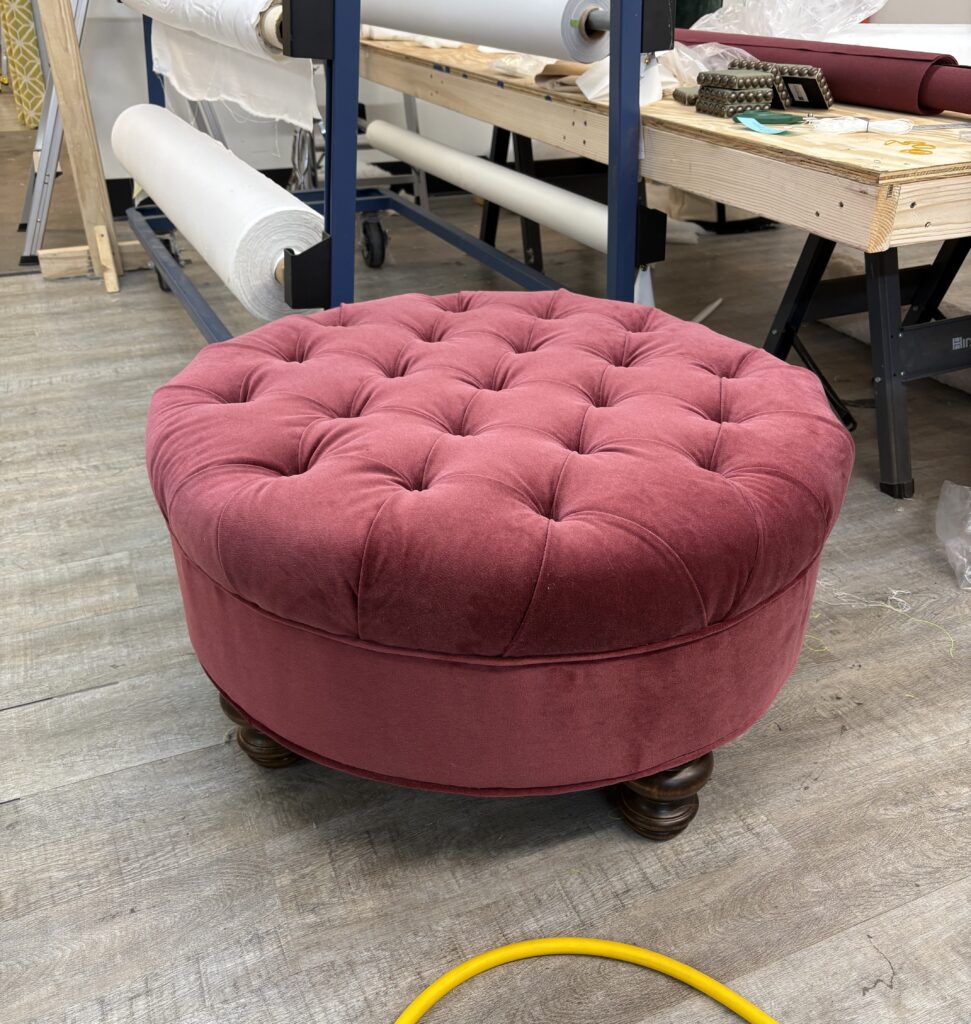
Built from the ground up, this ottoman started with a custom-cut plywood frame and lathe-cut legs. We even acquired a drill press to install the bolts needed to attach the legs.
Creating a piece from the ground up offers even more freedom to customize the finished result. The size and proportions can be designed specifically for the space, while the fabric and finishing details can coordinate with the other soft furnishings throughout the room. Instead of searching for an ottoman that is almost the right size, shape, or style, it can be made specifically for the project.
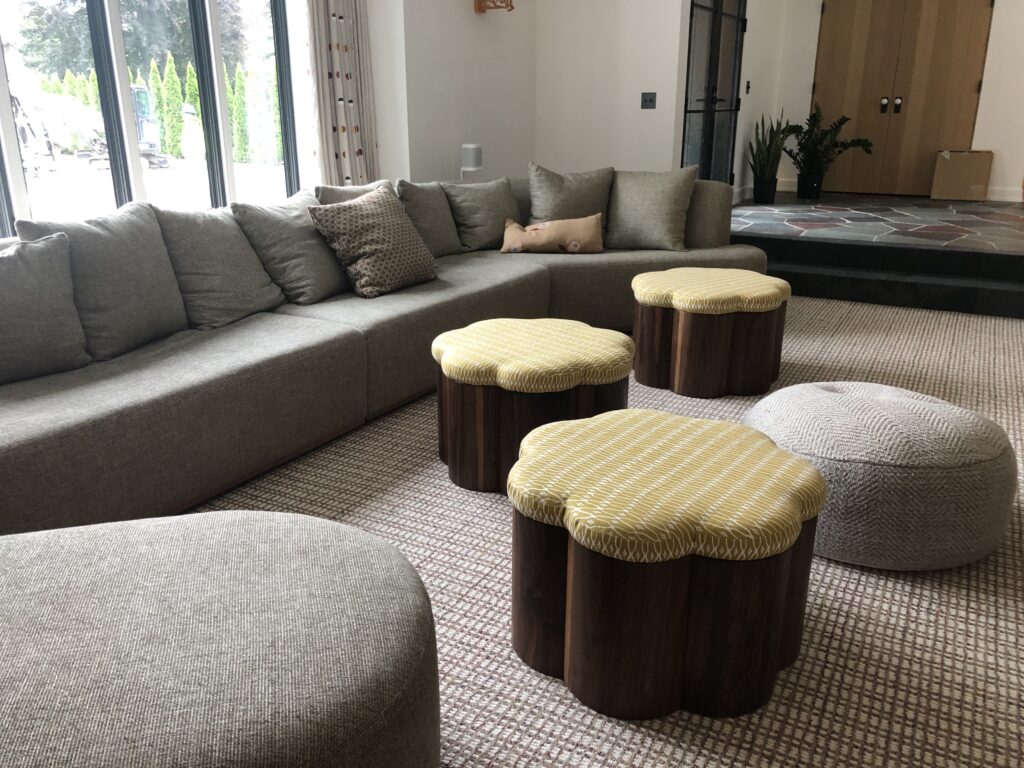
Made from scratch, these flower-shaped ottomans started with custom-built bases before coming to our workroom, where we created and upholstered the cushions to complete the design.
It also gives a whole new meaning to “custom.” From the structure hidden beneath the upholstery to the final fabric on top, every part of the piece is created with the finished room in mind.
An Extension of the Whole Design
Adding upholstery to our services has allowed us to take another part of a room from concept through fabrication. The same attention we give to pattern placement on drapery, precise construction on cushions, or the finishing details of a roman shade can now continue onto the furniture itself.
For designers, that means more opportunities to create a cohesive space and greater freedom to specify exactly what they envision. For homeowners, it means favorite furniture doesn’t have to be replaced simply because the fabric has worn or their style has changed.
Sometimes the perfect piece for a room is already there. It just needs the opportunity to become something new.
At Parkway Window Works, we love seeing what’s possible when skilled craftsmanship meets a designer’s vision. From transforming well-loved furniture with a completely new look to building custom pieces from the frame up, upholstery gives us another way to help designers create something truly unique for their clients.